ByJohn A
The Surface Science of Household Grime and What a Cleaning Service Removes
Household dirt rarely arrives at random. Most of it builds up through slow, repeatable physical and biological events that occur in every occupied home. A Dublin cleaning service spends its working hours undoing those events, and the methods used tend to follow the science of how soiling forms in the first place. Grasping that science explains why some grime lifts away in seconds while other deposits resist repeated scrubbing.
Cleaning professionals sort soiling into a handful of broad categories, and the equipment carried by a typical Dublin cleaning service maps onto each one. Loose particulate soil behaves differently from greasy organic soil, and both differ again from mineral scale and living microbial films. Matching the method to the soil type is what separates a surface that looks clean from one that is measurably low in contaminants.
Dust Is Mostly the Home Itself
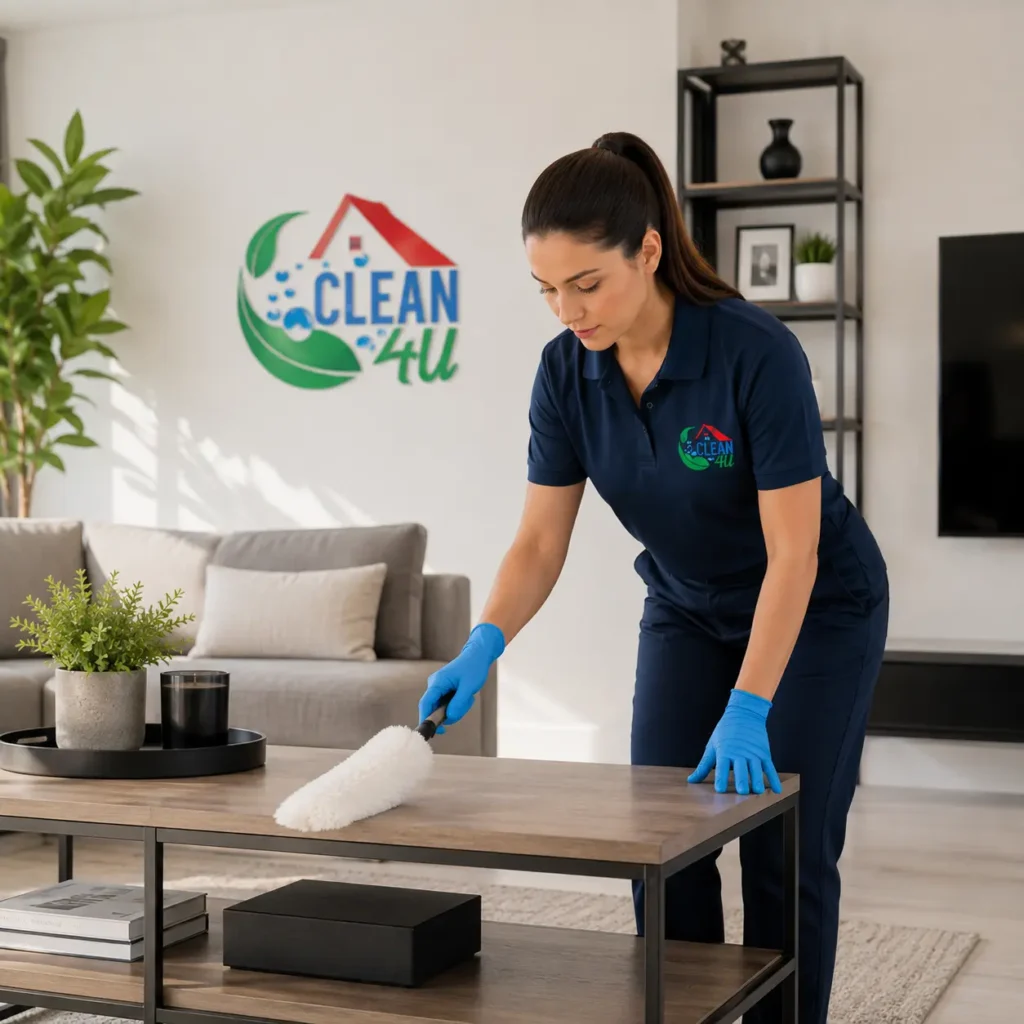
Household dust is less imported dirt than the building and its occupants shedding material. Skin cells, textile fibres, cooking residue, soot from candles and traffic, pollen and fragments of insects settle into a fine grey layer across flat surfaces. Static charge makes that layer cling to skirting boards, screens and synthetic fabrics, so dry dusting often lifts particles into the air, where they resettle within the hour. Microfibre cloths work by mechanical and electrostatic capture. Split synthetic filaments create a large surface area and a faint charge that holds particles rather than pushing them around. Vacuums fitted with high-efficiency particulate air filters trap fragments small enough to stay airborne, which matters for the fine allergen load that coarser filters blow straight back into the room.
See also: Plantation Shutters for Sliding Doors: What to Know Before Choosing a Design
Grease Needs Chemistry, Not Force
Kitchen films and skin oils are non-polar, and water alone slides off them without lifting anything. Surfactants solve the problem. A surfactant molecule has a water-loving end and an oil-loving end, so it surrounds grease droplets and holds them in suspension until they rinse away. Warm water helps because heat lowers the viscosity of fats and lets the surfactant reach them. This is why a warm cloth clears a hob that a cold one only smears across the surface. The same principle explains why a soak loosens a greasy extractor filter far better than hard rubbing ever manages.
Mould Is an Ecosystem, Not a Stain
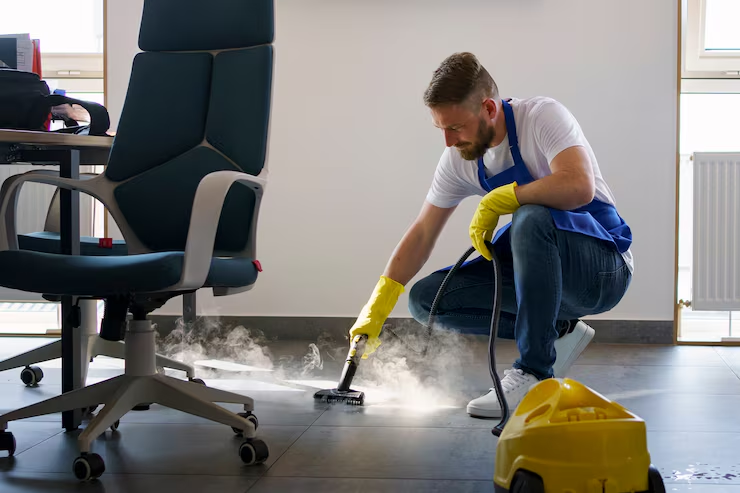
Black speckling along sealant and grout is a living colony rather than a mark. Mould spores drift through indoor air at all times and settle almost everywhere, yet they only grow where moisture, warmth and organic residue meet. An enclosed bathroom without a window traps humidity after every shower, and the thin film of soap and skin left on tiles feeds the spores. A quick wipe clears the visible colony but leaves microscopic threads rooted in porous grout, which is why the speckling returns within weeks. Steam cleaning reaches a temperature that kills the organism at the root, and better airflow removes the standing humidity that let it establish.
Porosity Decides How Hard a Surface Fights Back
Two surfaces in the same room can hold dirt very differently, and the reason is porosity. Polished stone, glazed tile and sealed worktops present a smooth face that grime sits on top of, so a single pass lifts most of it. Unsealed grout, bare timber and worn enamel are riddled with tiny openings that draw liquids and residue inward, beyond the reach of a surface wipe. This is why a bathroom can look tired long after every visible mark has gone. The dirt has moved below the surface. Restoring porous materials calls for either deeper mechanical work or a sealant that closes the openings, and knowing which surface needs which treatment saves a great deal of wasted effort.
Limescale Is Dissolved Rock
In hard-water districts, tap water carries dissolved calcium and magnesium picked up from the ground it passed through. As that water evaporates on taps, shower glass and kettles, the minerals crystallise into the chalky crust known as limescale. Scale is alkaline, so a mild acid such as diluted citric acid or white vinegar dissolves it, while a general-purpose detergent barely touches it. Matching the cleaner’s pH to the deposit, an alkaline product for fats and a mild acid for scale, accounts for much of what makes professional results repeatable rather than a matter of brute effort.
Cross-Contamination Travels on the Cloth
Cleaning can spread contamination as readily as it removes it. A single cloth wiped across a toilet and then a worktop carries bacteria between the two, leaving a surface that looks spotless and is anything but. Colour-coded microfibre systems answer this by assigning a separate colour to each zone, keeping bathroom cloths apart from kitchen cloths so nothing crosses between them. The logic mirrors the separate chopping boards used in any careful kitchen.
Order and Dwell Time Change the Result
Sequence matters more than it appears. Cleaning from high surfaces downward means any dust knocked loose lands on areas not yet reached, rather than on ground already finished. Most disinfectants also need dwell time, a stated number of minutes in contact with the surface, before they kill microbes. Wiping a product away too soon leaves a surface that looks clean while much of the microbial load survives untouched. A large part of the gap between a quick tidy and a thorough clean sits in these quiet details of chemistry, timing and material choice, none of which show up in a photograph of the finished room.